



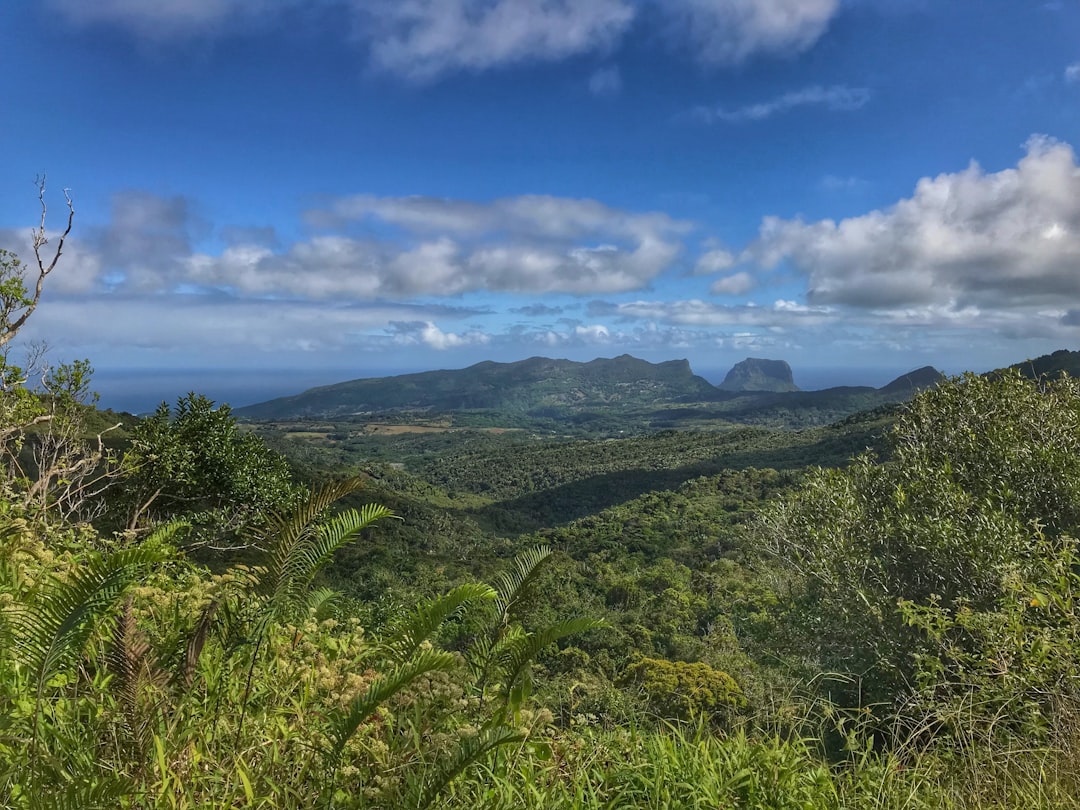
Most visitors know Mauritius for its coastline, but the island's interior holds a different kind of landscape entirely: steep forested gorges, waterfalls dropping off basalt cliffs, and the last significant stand of native rainforest left after centuries of clearing for sugar cane. Black River Gorges National Park, gazetted in 1994, protects roughly 6,754 hectares of this terrain in the south-west, and it remains the country's only national park.
Why This Forest Matters
Before European contact, Mauritius was almost entirely forested; today, native vegetation survives on only a small fraction of the island, and the gorges hold the largest continuous remnant. That makes the park critical habitat for species found nowhere else, including the Mauritius kestrel, the pink pigeon, and the echo parakeet — all three brought back from the edge of extinction over the past four decades.
Trails Worth Lacing Up For
The park's network totals more than 60 kilometres of marked paths, ranging from gentle valley walks to a genuine summit hike.
- Macchabée Trail — a roughly 10-kilometre loop through mature native forest of black ebony, tambalacoque and bois de natte, with orchids and ferns crowding the understorey. This is the park's signature walk and the most reliable for birdwatching.
- Black River Peak (Piton de la Petite Rivière Noire) — an out-and-back climb of roughly 8 kilometres to the island's highest point at 828 metres. The final approach is steep and can be slippery after rain, but on a clear day the summit gives a rare 360-degree view across the whole island.
- Parakeet Trail — an easier route following the Black River itself through fern-lined valleys, well suited to families and good for spotting echo parakeets at close range.
What You Might See
The Mauritius kestrel is the park's headline species and one of conservation's genuine turnaround stories: by 1974, only four wild birds remained, making it briefly the rarest bird on Earth. Intensive captive breeding and release work through the 1980s and 1990s pushed numbers into the hundreds, though the wild population has since settled back to an estimated 350 or so individuals and the species remains classified as Endangered — a reminder that recovery is not the same as safety. Pink pigeons, salmon-breasted and unmistakable, dropped to around ten birds in the wild in the 1980s and now number roughly 400, often seen near the visitor centre feeding stations. Fruit bats (Mauritian flying foxes) are easy to spot roosting in daylight, and deer introduced during the Dutch colonial period still roam the forest.
Getting There and Getting Ready
The park has two main access points: the Black River Gorges Visitor Centre on the coastal side, and the Pétrin entrance off the Chamarel road, which sits closer to the high-altitude trailheads. Entry is free, and both entrances have parking and trail maps. Carry at least two litres of water per person, wear shoes with real grip, and start early — the upland plateau generates its own cloud cover by early afternoon, which can erase the summit views entirely. A light waterproof is worth packing regardless of season.
A Conservation Story Worth Walking Through
The Mauritian Wildlife Foundation and the National Parks and Conservation Service have run one of the most closely watched species-recovery programmes anywhere in the world inside these gorges. Fences excluding invasive predators, captive-breeding aviaries and habitat restoration have pulled the kestrel, the pink pigeon and the echo parakeet back from single-digit populations. Walking these trails is, in a very literal sense, walking through decades of applied conservation science.