



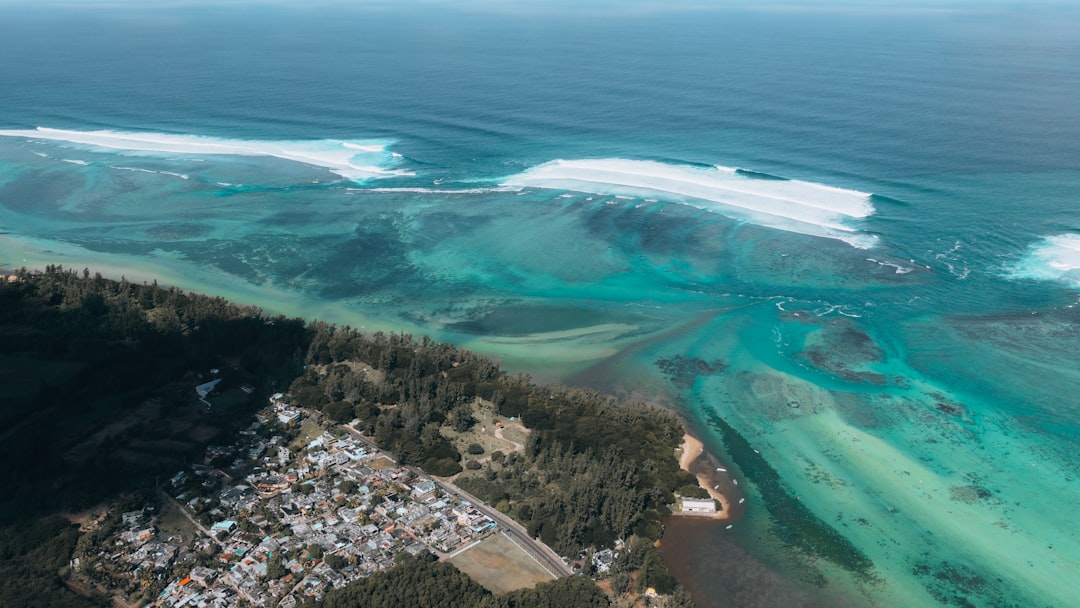
At the southwestern tip of Mauritius, a wide coral reef shelters a lagoon so flat and shallow that it functions almost like a purpose-built kite park. Riders can stand up in waist-deep water across much of the riding area, the sand bottom is soft underfoot, and Le Morne Brabant — the sheer basalt mountain that gives the peninsula its name — rises directly behind the launch beach. It's this combination of forgiving water and dramatic scenery that has made Le Morne a genuine fixture on the world kitesurfing circuit rather than just a regional favourite.
Why the Lagoon Works So Well
Because the reef breaks the ocean swell well offshore, the lagoon inside it stays calm even when the wind is strong — a rare pairing. There's no boat traffic to dodge in the main riding zone, few underwater hazards, and a cross-onshore wind that tends to carry riders back toward shore rather than out to sea if something goes wrong. For someone learning, being able to simply stand up after a fall rather than tread water is a genuine difference-maker, and instructors here consistently point to it as the reason beginners progress faster than at most other spots.
Wind Season
Mauritius sits in the path of the southeast trade winds, and Le Morne catches them well. The main season runs roughly May to October, with July and August typically the windiest and most consistent stretch; average wind in season runs in the high teens to high twenties of knots, arriving cross-onshore from the east to southeast. Outside that window, from around November to April, the wind is lighter and less predictable, though rideable days still turn up regularly — it's a period many schools favour for complete beginners precisely because conditions are gentler.
Learning to Kite at Le Morne
Several IKO-affiliated kite schools operate directly on the lagoon and teach in multiple languages. A typical beginner course runs across a few days and covers kite control on land, body-dragging in the water, and eventually getting up on the board — and the shallow, flat conditions mean most students are riding independently well before the course ends, which isn't always true at deeper-water spots.
Beyond the Lagoon: One Eye
Just outside the reef, the wave known as One Eye is a serious left-hand break over shallow coral, and it draws experienced wave riders from well beyond Mauritius during the winter swell season. It is not a beginner spot in any sense — the reef sits close to the surface and the wave has real power — but watching it from the beach is a highlight in itself.
Planning a Kite Trip
- Stay in Le Morne village or nearby La Gaulette for the shortest walk to the lagoon
- Rental gear is widely available if you'd rather not fly with your own kites and board
- On low-wind days, hike Le Morne Brabant itself or head inland to Chamarel
- Book lessons a day or two ahead in peak season (July–August), when schools fill up