



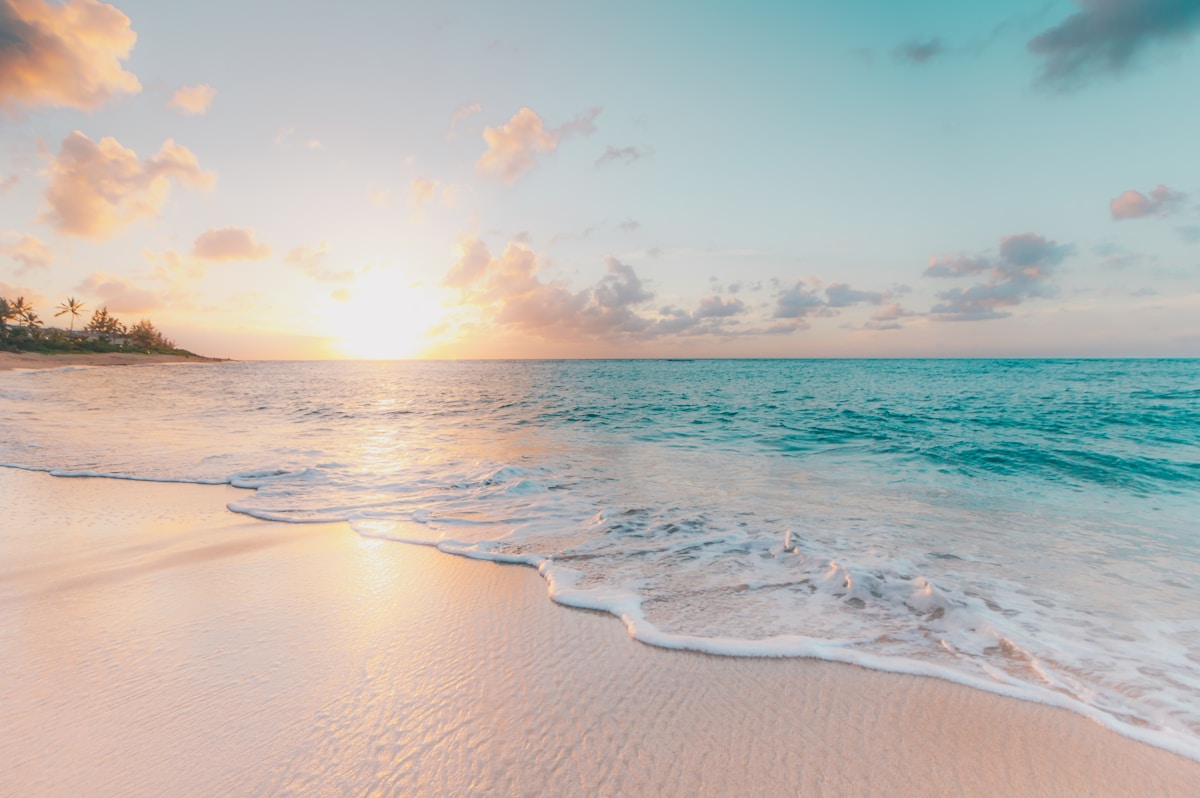
Mauritius's coastline runs for roughly 150 kilometres around the island, almost all of it fringed by coral reef that keeps the lagoon water calm, shallow and startlingly clear. Every coast has its own character, shaped by wind direction, reef shape and how close the mountains come to the shore. These seven are worth building a trip around.
Trou aux Biches (North)
A long, sheltered stretch of white sand backed by casuarina trees, Trou aux Biches has some of the calmest, shallowest water on the island, which makes it a natural choice for families and inexperienced swimmers. The reef sits close enough to shore for decent snorkelling straight off the beach.
Flic en Flac (West)
Wide, long and backed by the silhouette of the Rempart mountains, Flic en Flac faces west, which means it also has the best sunset views on the island. A string of casual beach bars along the sand makes it an easy spot to settle in for the evening.
Le Morne (Southwest)
Sitting beneath Le Morne Brabant, the basalt mountain inscribed as a UNESCO World Heritage Site in 2008 for its history as a refuge for escaped slaves, this stretch of coast does double duty: a serious kitesurfing destination by day, thanks to reliable trade winds, and a quieter, more romantic beach come evening.
Belle Mare (East)
A long run of fine, pale sand along the calmer east coast, Belle Mare tends to be less crowded than the north, with a warm, shallow lagoon that suits swimming over snorkelling. It's a good pick for travellers who want space without sacrificing convenience.
Blue Bay (Southeast)
Blue Bay was declared a national park in 1997 and formally gazetted as a marine park in 2000, and later recognised as a Ramsar wetland of international importance. Its 353-hectare protected reef is genuinely one of the better snorkelling sites in the region, with coral gardens close enough to shore that glass-bottom boat operators run daily trips from the beach.
Gris Gris (South)
The south coast is a different Mauritius altogether: wild, wind-battered cliffs facing straight into the open Indian Ocean, with waves that make swimming inadvisable rather than inviting. It's worth the detour for the scenery alone, and for a reminder that the island isn't only postcard lagoons.
Île aux Cerfs (East, boat access only)
Reachable only by boat from Trou d'Eau Douce, this small offshore island pairs a genuinely stunning lagoon with a well-regarded golf course and a handful of beachfront restaurants. Because access is controlled by boat schedules rather than a road, it tends to feel less crowded than its popularity would suggest, particularly if you arrive before the mid-morning rush of day-trip catamarans, and a short walk past the main jetty area usually finds a quieter stretch of sand.
Choosing Between Them
If you only have time for two, pair a calm, swimmable lagoon beach on the north or east coast with one dramatic contrast, whether that's the cliffs at Gris Gris or the protected reef at Blue Bay. The island rewards that kind of variety far more than staying anchored to a single stretch of sand for the whole trip.
Whichever coast you choose, Lagunea can arrange transfers, boat charters and beach-day logistics so the only decision left is which colour the water is today.