



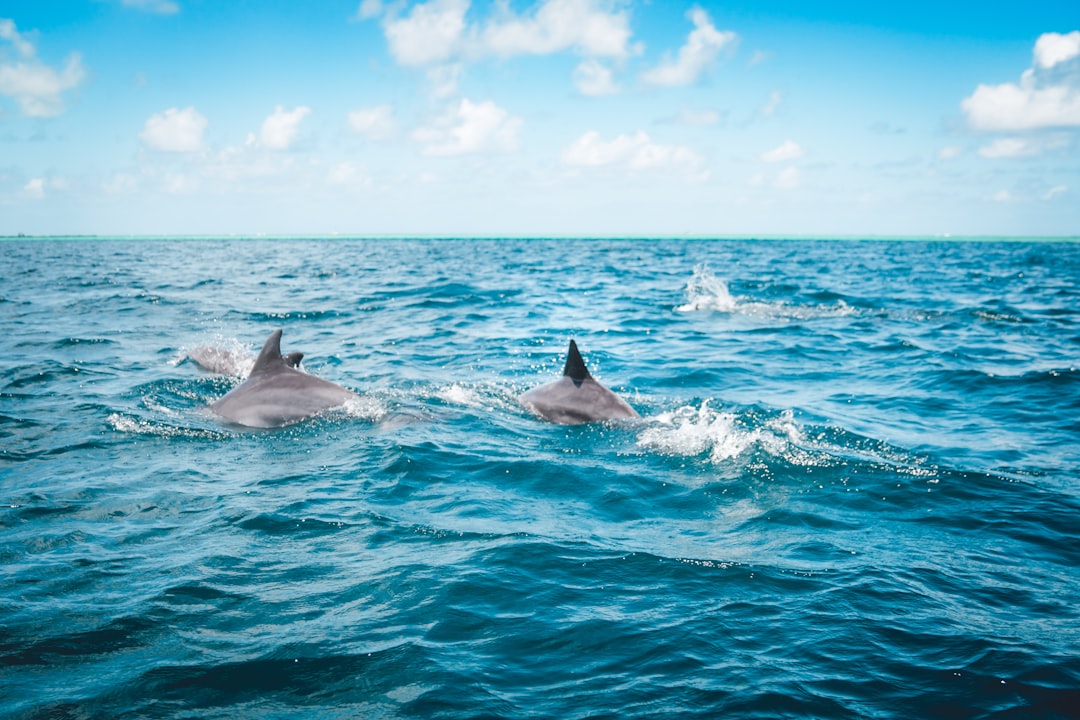
Along the western coastline of Mauritius, from Tamarin down towards Black River, pods of spinner dolphins (Stenella longirostris) move into sheltered bays most mornings to rest after a night spent hunting fish and squid in deeper offshore water. Because their daily rhythm is so predictable, this stretch of coast has become one of the most reliable places in the world to see wild dolphins from a small boat, and on calm days, to slip into the water near them.
Why the Dolphins Gather Here
Spinner dolphins are named for the acrobatic leaps in which they can rotate several times in the air before re-entering the water. Researchers believe the behaviour serves several purposes at once: shaking off remoras and parasites, signalling to other pod members, and simply working excess energy off after a long rest. Pods here typically number from a few dozen to over a hundred animals, and the sheltered bays off Tamarin and Black River give them calm, shallow water in which to socialise and doze through the daylight hours before heading back out to feed at night.
Where Trips Depart From
Most dolphin-watching boats leave from Black River (Rivière Noire) or Tamarin between roughly 6.30 and 8am, since the dolphins tend to move further offshore, and become harder to find, as the morning wears on. Because the pods are resident along this coast rather than passing through, sightings on any given morning are common, though never guaranteed — these are wild animals, not a scheduled attraction, and a responsible operator will say so plainly.
Watching Versus Swimming
Whether you should get in the water is worth thinking about before you book. Mauritius has faced real criticism over the years for boats crowding pods and pushing swimmers directly into their path, which disturbs the animals during rest — precisely the time they most need to be left alone. In response, the Mauritius Tourism Authority has regulations covering dolphin and whale watching, including limits on how boats may approach and behave around pods. A trustworthy operator will follow them without being asked: no cutting off or encircling a pod, engines idled well before anyone enters the water, no chasing dolphins that are moving away, and a firm cap on time spent near any one group.
- Ask directly how many boats the operator allows near a single pod at once
- Choose a smaller boat with a low passenger count over a large group excursion
- Avoid any operator who promises guaranteed close contact or touching
- Expect to pay roughly MUR 1,500–3,000 per person for a morning trip
Making the Most of Your Morning
Bring reef-safe sunscreen, a rash guard, and motion-sickness tablets if you are at all prone to seasickness, since the crossing to deeper channels can be swelly early in the day. A mask and snorkel are usually supplied, but bringing your own is worth it for the fit. Above all, treat the outing as wildlife watching rather than a guaranteed swim: the dolphins that choose to approach a quiet, patient boat are giving you something they don't owe anyone, and the best encounters tend to go to visitors, and operators, who don't force the moment.
Beyond Tamarin
Full-day catamaran charters from the north of the island sometimes combine a west-coast dolphin stop with snorkelling and a beach lunch, which suits travellers based around Grand Baie who don't want an early transfer. Either way, book with an operator who can explain their approach policy in plain terms — if they can't, that's a sign to look elsewhere.