


About 560 kilometres northeast of the Mauritian mainland, Rodrigues is a small volcanic island that belongs to the Republic of Mauritius but feels, almost deliberately, like somewhere else entirely. There are no high-rise resorts, no real traffic, and a population of around 43,000 that still largely lives by fishing, small farming, and a slower calendar than the main island's. For travellers who've already done Mauritius's beach resorts and want something rawer, Rodrigues is worth the extra leg of the journey.
An Island Built Around Its Lagoon
Rodrigues covers roughly 108 square kilometres, but the lagoon that surrounds it is larger still — a wide, shallow expanse of turquoise water enclosed by a barrier reef. That lagoon shapes nearly everything about local life: it's the source of the octopus fishing that remains a major livelihood, it produces some of the calmest, clearest swimming water in the Indian Ocean, and it's why boat trips out to small lagoon islets are one of the best things to do here. Low tide sends women and children out across the flats with buckets and simple metal hooks to gather octopus by hand, a scene that has barely changed in generations and one of the more striking sights a visitor can witness on a morning walk along the shore.
Getting There
Air Mauritius runs regular flights between Sir Seewoosagur Ramgoolam International Airport and Rodrigues's Sir Gaëtan Duval Airport (at Plaine Corail), a flight of a little under two hours. For travellers who have the time, the Mauritius Trochetia cargo-and-passenger ship also makes the crossing, though it's a journey of well over a day at sea and suits those after the experience as much as the destination. Once on the island, hire cars and scooters are available in Port Mathurin, but distances are short enough that cycling or simply walking between nearby beaches is entirely realistic.
Beaches and Islets
- St François — a long, largely empty stretch of white sand on the island's east side
- Trou d'Argent — reached only via a coastal walk, a sheltered cove between cliffs that rewards the effort
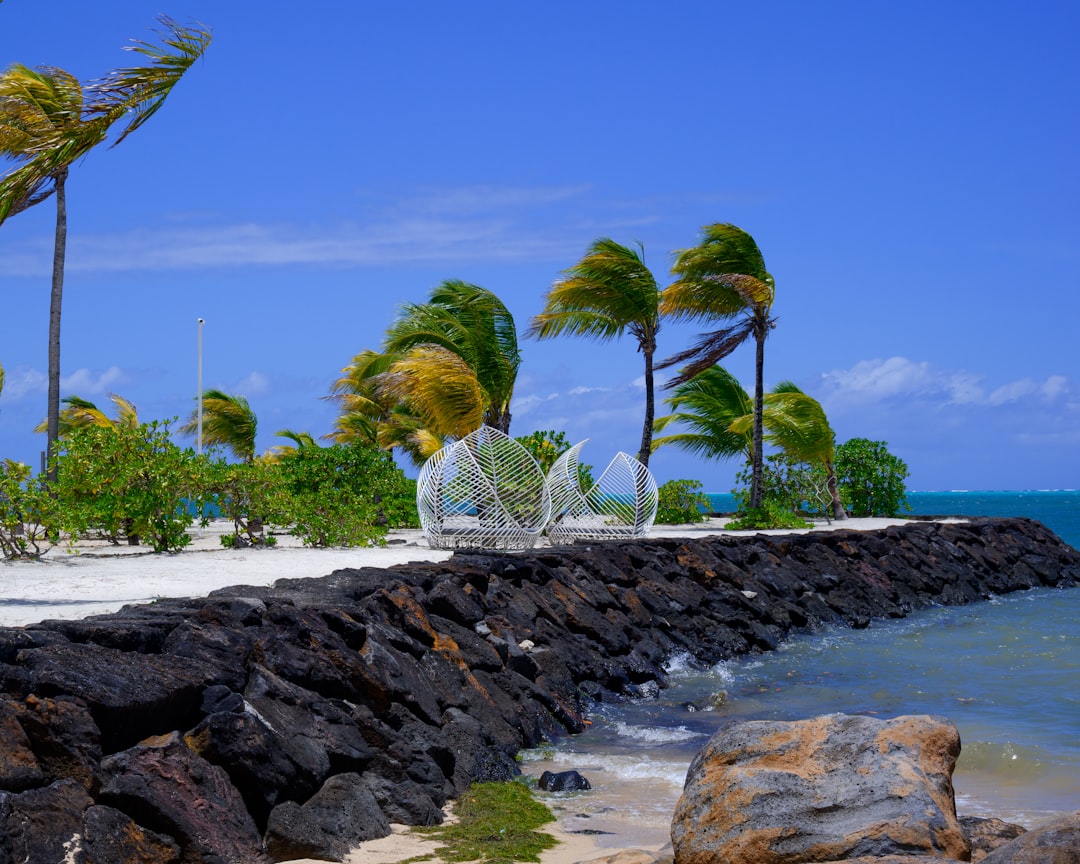
- Île aux Cocos — a seabird nature reserve accessible by boat, with some of the clearest water around the island and guided snorkelling
- Graviers and Anse Ally — calmer, family-friendly lagoon swimming closer to the main towns
Food and Culture
Rodriguan culture draws on Creole, African and French roots, and it shows most clearly in the music — a rawer, more percussive take on sega than what's typically heard on the main island — and in the Saturday market at Port Mathurin, where stalls sell homemade chilli pastes, honey, pickles and dried octopus. On the plate, expect octopus curry, rougaille poisson, and fresh-baked bread; much of the island's produce is grown without pesticides simply because large-scale farming never took hold here.
Planning Your Visit
Rodrigues is not undiscovered exactly — it has a small, steady flow of visitors, mostly Mauritian and French — but it remains quiet by regional standards, and infrastructure is developing gradually rather than all at once. A few days added onto a Mauritius trip is enough to get a real sense of the island's pace, and most visitors leave wishing they had scheduled longer. Accommodation ranges from simple guesthouses to a handful of small hotels, and because the island is compact, few places are more than a short drive from Port Mathurin, making a home base easy to choose without overthinking logistics.