



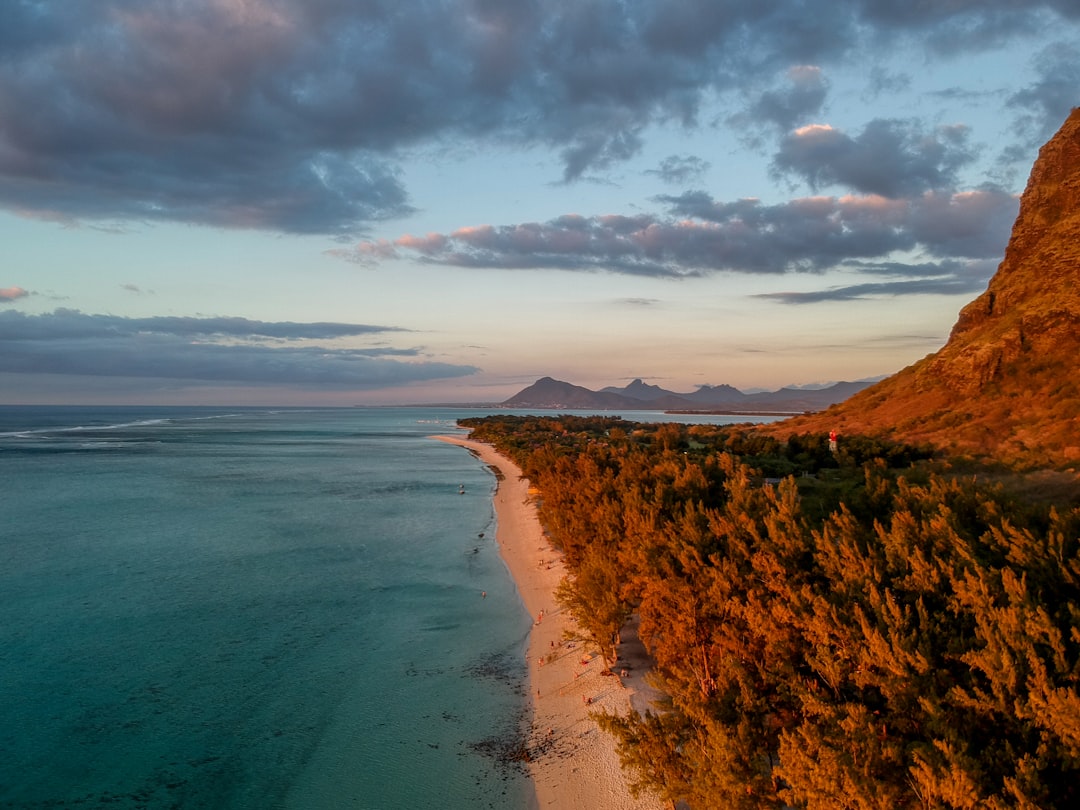
Mauritius's reputation as a honeymoon island can make it easy to overlook as a solo destination, but the qualities that make it a safe place for a couple — low crime, reliable infrastructure, a small and easily navigable landmass — apply just as much to someone travelling on their own. In the 2025 Global Peace Index, Mauritius ranked as the most peaceful country in Africa, a distinction it has held for several years running. That ranking translates, in practice, into an island where solo travellers can walk, hike and explore with a level of ease that's unusual in the region.
Where to Base Yourself
Grand Baie, on the north coast, is the easiest starting point for a first solo trip: its density of restaurants, bars, beaches and tour operators means an entire itinerary can be built without a car, and its steady flow of travellers makes it simple to fall into conversation over a meal or a group excursion. Flic en Flac, on the west coast, offers a quieter, slightly more local alternative with a long beach made for solo sunset walks and a strong concentration of dive centres, which double as a built-in social scene for anyone travelling with a certification card. Tamarin and the surf and kite communities further south suit active solo travellers happy to spend a week around the same few breaks and studios, where familiarity builds fast.
Rodrigues, for the More Adventurous
Mauritius's outer island, Rodrigues, sits around 600 kilometres east and runs on an even smaller, closer-knit scale. Its size means visitors are noticed and, more often than not, looked after — guesthouse owners routinely point solo guests toward the right hike, the right fisherman for a boat trip, or a village event worth joining. It rewards travellers willing to slow down and let the island's pace set the itinerary.
Practical Basics
- Getting around: a rental car or scooter (an international driving permit is required) offers the most flexibility; public buses link every major town cheaply, and ride-hailing apps operate across much of the island.
- Budget: guesthouses start from around €30 a night, street food runs a few hundred rupees a meal, and bus fares are a fraction of that — the costliest parts of a Mauritius trip, resort stays and packaged excursions, are easy to skip on an independent budget.
- Everyday safety: standard precautions apply — keep valuables out of sight on quiet beaches after dark, use accommodation safes for passports, and take the same care in nightlife areas that you would anywhere else in the world.
Meeting People
Structured activities remain the fastest route to company: dive trips, catamaran cruises, guided hikes and cooking classes all put solo travellers in a room — or a boat — with people to talk to. Mauritians themselves are famously warm toward visitors; the island's population descends almost entirely from elsewhere — India, Africa, China, Europe, Madagascar — and that shared history of arrival tends to translate into genuine curiosity about newcomers rather than indifference. A few words of Mauritian Creole (ki manière — how's it going; mersi — thank you) go a long way.
Solo-Friendly Things to Do
Hiking needs no companion: Le Pouce, Corps de Garde and the well-marked trails of Black River Gorges National Park suit a confident solo walker. Snorkelling the shallow reef at Blue Bay Marine Park requires no guide. Port Louis's Central Market rewards wandering at your own pace. And an early-morning paddleboard session on the glassy east-coast lagoon is, for many solo visitors, the single most memorable hour of the trip.