



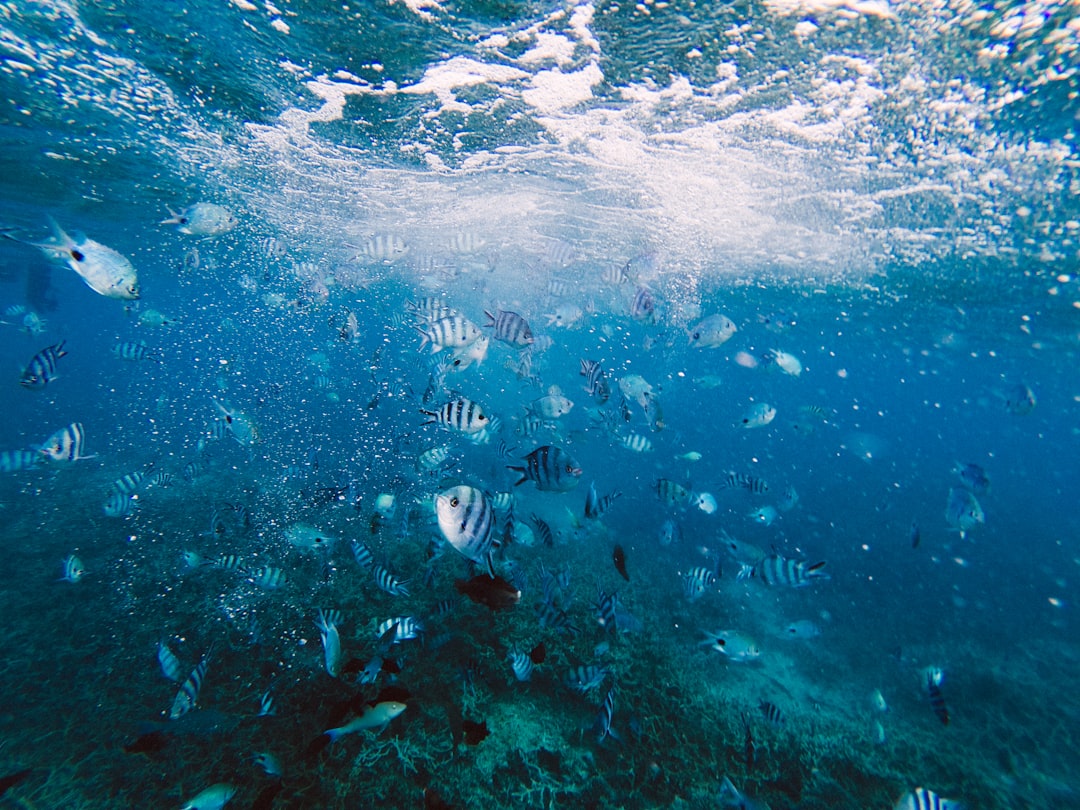
On the south-eastern coast, not far from the airport, Blue Bay Marine Park is generally regarded as the easiest place in Mauritius to snorkel straight off the beach and still see a genuinely healthy reef. The 353-hectare park was declared a national marine park in 1997 and recognised as a Ramsar wetland of international importance in 2008, protections that have kept its coral in notably better condition than many easily accessible reefs elsewhere on the island. The bay's name comes from the water itself, which shifts between vivid turquoise and deep sapphire depending on depth and light, and in places the reef begins only a short wade from the sand.
What's Under the Water
Surveys of the park have recorded around 38 coral species and roughly 70 species of fish within its boundaries, a solid diversity for a site this compact and this close to shore. Large brain corals anchor much of the reef structure, with branching and plate corals filling in the gaps, and the whole area is busy with reef fish — parrotfish grazing visibly on coral, along with damselfish, butterflyfish and various wrasses moving through the formations. In the slightly deeper channels, patient snorkellers can spot moray eels tucked into crevices and occasionally an octopus holding still against the reef. Green turtles are regular visitors, grazing on seagrass beds at the park's edges, and while sightings are not guaranteed, they are common enough that many visitors see one.
Glass-Bottom Boats
For anyone who would rather stay dry, or is travelling with young children or non-swimmers, glass-bottom boat tours run throughout the day from the main beach, drifting slowly over the reef so passengers can watch through the transparent hull. Trips typically last thirty to forty-five minutes. They are also a useful way to scope the reef layout before getting in the water yourself.
Getting There and What It Costs
Blue Bay sits roughly 30–40 minutes south of the airport, making it a practical stop on an arrival or departure day. The beach has basic facilities — a food stall, changing rooms, and equipment rental for a mask, snorkel and fins. Entry to the park itself is free, though donations support ongoing conservation work, and a guided snorkelling tour is worth considering for help spotting and identifying species you might otherwise swim past.
Marine Park Rules
- Do not touch, stand on, or collect coral or shells.
- Do not feed the fish.
- Boats must use mooring buoys rather than anchoring on the reef.
- Choose a reef-safe, mineral-based sunscreen — chemical filters such as oxybenzone are linked to coral stress and bleaching.
These rules are enforced with reasonable consistency, and the result is a reef that has held up noticeably better than many comparable sites. Visiting early in the day, before boat traffic and larger tour groups arrive, generally means clearer water and a better chance of a close turtle sighting.
A morning at Blue Bay is not just a pleasant swim — it is a working example of how a well-managed marine protected area can keep tourism and conservation compatible.